Taught by two voice care providers, this interactive session will cover the 411 on supporting healthy voice care and hygiene for choral singers across the ages to avoid 911 vocal health emergencies. The content of this session will cover accessible, evidence-based exercises and methods used in voice care clinics that are applicable in and beyond choral rehearsals and performances. Session attendees will learn about phonotrauma and how to avoid it through habits and hygiene that support healthy singing voices across the lifespan. This session is accessible for all levels of singing training and is inclusive of all voice types and genders. Through sequenced exercises used in clinical voice care, attendees will learn specific tools and habits they can apply with their choirs and to their own vocal health habits to promote and sustain healthy singing across a lifetime.
Supporting Lifelong Vocal Health: The “411” To Prevent “911” Emergencies
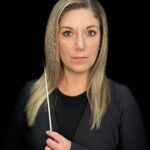
Zerrin Martin
Zerrin Agabigum Martin is active as a conductor, voice clinician, educator, and professional singer. Dr. Martin is an assistant professor, director of choral activities and choral music education at the University of Tampa. Martin earned her DMA in choral conducting with a cognate area of research in speech, language, pathology at the University of Florida. Previously, she taught fifth through twelfth grade choral music in private and public schools for eleven years. Her research is centered on applying evidence-based practices in choral pedagogy. In addition to publishing in the Choral Journal, she has presented at ACDA state conferences, National NBASLH, and FLASHA. She is licensed by the State of Florida Board of Speech-Language Pathology & Audiology as an SLP-A. and is active as a voice care clinician. She sings regularly with Conspirare and the Oregon Bach Festival.
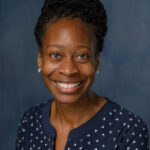
Candice Adams-Mitchell
Candice Adams-Mitchell is a clinical assistant professor and director of undergraduate studies at the University of Florida. She has practiced speech language pathology for fourteen years and has worked in a variety of settings such as skilled nursing facilities, home health, specialty care units in trauma hospitals, schools, early intervention, and travel therapy. Dr. Adams-Mitchell has also spent several summers in Zambia providing therapy to children in orphanages. Her research interests center on leveraging artificial intelligence to determine vocal biomarkers of pain and the relationship between sickle cell disease and neurological conditions such disordered swallowing, pain, and acute chest syndrome.